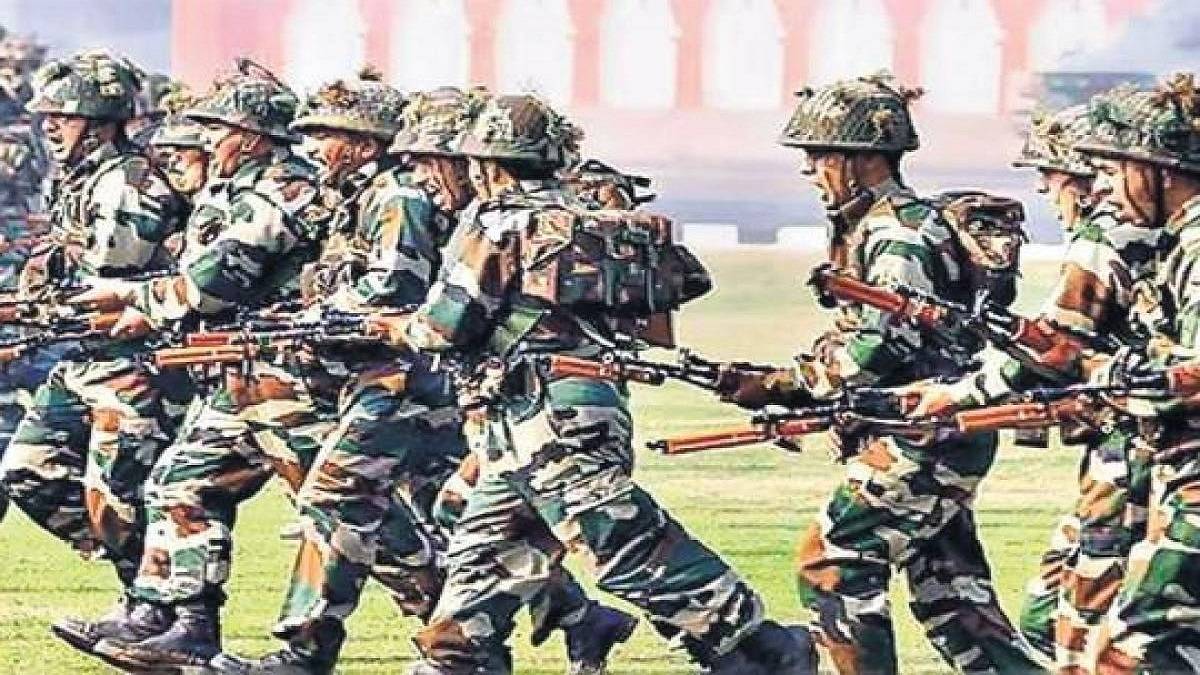


Written by retired IPS officer Manmohan Praharaj (former DGP of Odisha), this article defends the Central Armed Police Forces (General Administration) Bill, 2026 against critics who argue that CAPFs should have fully insulated, force specific leadership. The author contends that while CAPF officers’ grievances about career stagnation and lack of parity are valid, reform must not come at the cost of dismantling India’s carefully designed internal security coordination architecture. He argues that the current system where IPS officers hold cross institutional leadership roles and serve as a “legal operational bridge” between CAPFs, state police, and intelligence agencies ensures coherence in crisis response. The Bill, he says, addresses personnel inequities through better cadre management and promotion pathways without breaking these critical inter agency linkages. The author frames internal security as a “networked system” dependent on shared experience, cross domain learning, and integrated command structures, all of which would be weakened by organisational insularity.
Key Arguments
Coordination must be built into the architecture itself, not improvised during crises. India’s post Independence design intentionally created cross institutional leadership pathways to prevent fragmentation.
IPS officers serve as a legal operational backbone since all internal security actions (arrests, FIRs, evidence, prosecution) are anchored in state police authority under the BNS/BNSS/BSA, IPS leadership provides the legal legitimacy that pure CAPF command cannot.
Internal security is a networked information system. Intelligence must flow seamlessly across agencies, and this depends on informal trust networks built through shared experience, not just formal protocols.
Cross institutional learning strengthens the overall system. Operational innovations travel across organisations via officers with multi force exposure. Siloed forces lose this adaptive capacity.
Organisational insularity is a systemic risk. Fully insulated force leadership may boost internal morale but reduces interoperability, information exchange, and coordinated response capability.
The 2026 Bill is a calibrated, not radical, reform. It improves CAPF career frameworks and addresses promotion stagnation without removing the integrative mechanisms that hold the security architecture together.
Reform need not be a binary choice. Career equity and institutional integration are compatible goals. The debate should not be framed as one versus the other.
What are CAPFs?
The Central Armed Police Forces are a group of seven paramilitary/police organisations under India’s Ministry of Home Affairs including the CRPF, BSF, CISF, SSB, ITBP, NSG, and Assam Rifles. They handle internal security duties ranging from counter insurgency and border guarding to VIP protection and disaster response. Together, they number over 10 lakh (1 million) personnel.
What is the debate?
A longstanding tension exists between CAPF officers (who rise through their own cadres) and IPS officers (who are deputed to head these forces at the Director General/Inspector General level). CAPF officers argue this “IPS dominance” blocks their career advancement and that forces should be led by officers who have served within them their entire careers. The CAPF (General Administration) Bill, 2026 has reignited this debate by proposing changes to leadership and cadre structures. Critics from within CAPFs want full insulation i.e. top posts reserved exclusively for force specific officers while the author and the government argue this would damage the broader internal security system.
The author does not advocate a single sweeping reform but proposes a balanced, dual track approach.
Address genuine CAPF grievances. Resolve promotion stagnation, improve parity in service conditions, and provide clearer cadre management frameworks as the 2026 Bill attempts.
Preserve IPS deputation at leadership levels. Retain limited cross institutional postings as structural instruments that sustain coordination and shared operational language.
Avoid fully insulated leadership structures. Do not create closed career pyramids within individual forces that cut them off from the broader security network.
Institutionalise coordination proactively. Rather than relying on crisis time improvisation, build coordination into the design of leadership pipelines.
Treat the 2026 Bill as a landmark step. Implement it as a proportionate reform that achieves equity without sacrificing systemic coherence.
Potential gaps and biases:
Author’s background colours the argument. As a retired IPS officer, Praharaj has a direct institutional interest in defending the IPS deputation system. The article does not seriously engage with the strongest counterarguments from CAPF officers.
CAPF officers’ perspective is underrepresented. The article acknowledges their grievances as “legitimate” but quickly pivots to why systemic concerns override them. The frustration of spending 30 or more years in a force only to be superseded by an IPS officer from outside is not adequately addressed
Coordination argument could cut both ways. One could argue that long serving CAPF officers also build deep institutional knowledge and inter agency trust and that an IPS officer rotated in from a state cadre may actually disrupt established networks.
Vague on specifics of the Bill. The article supports the 2026 Bill broadly but does not engage with its specific provisions in detail, making it difficult to assess whether its praise is warranted or rhetorical.
No empirical evidence cited. Claims about coordination failures or successes under different leadership models are asserted rather than demonstrated with data or case studies.